
This post may contain affiliate links. If you buy through them, I may earn a small commission at no extra cost to you.
A tree looks finished when it has a theme — not a store-bought matching set, but a decision about color and texture that every ornament answers to. Make that decision first and the rest takes an afternoon.
Below are twenty themes, the method that makes any of them look professionally decorated, and what to do when half your ornaments are children’s crafts. For the rest of the house, start with our Christmas decor ideas guide.
First, the Method That Works for Every Theme
1. Lights, Branch by Branch
Plan on roughly 100 warm white lights per foot of tree height, and wrap them around each branch from the trunk outward instead of draping them around the outside. It takes twenty minutes longer and makes the tree glow from the inside rather than looking like it’s wearing a net.
2. Ribbon or Garland Next
Run ribbon in loose vertical waves from top to bottom, tucking it into the branches so it disappears and reappears. Vertical reads taller; horizontal wrapping makes a tree look shorter and fussier.
3. Filler Ornaments, Deep Inside
Plain matte balls in your base color, pushed close to the trunk. These fill the dark gaps and make a thin tree look full. Nobody will notice them individually, and that’s the point.
4. Texture
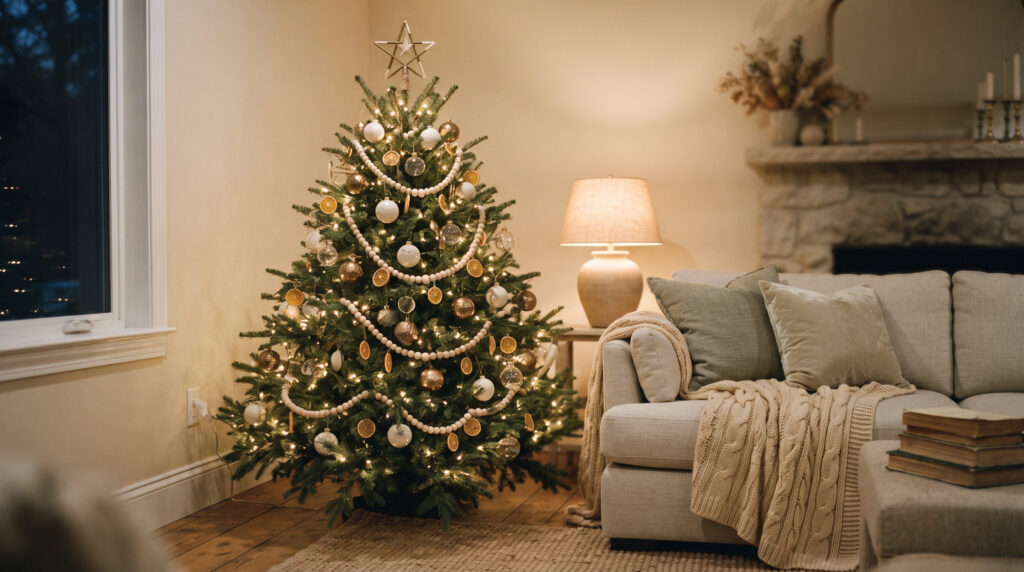
Wood beads, pinecones, dried orange slices, fabric stars, bottle brush trees. Texture is what separates a decorated tree from a shiny one.
5. Feature Ornaments at Eye Level
Eight to twelve special pieces, spaced evenly, hung at the ends of branches where they catch light.
6. The Topper and the Base
One topper, not three ideas at once. At the base, a basket, a folded wool blanket or a length of linen beats most tree skirts.
20 Christmas Tree Themes
Neutral and Natural
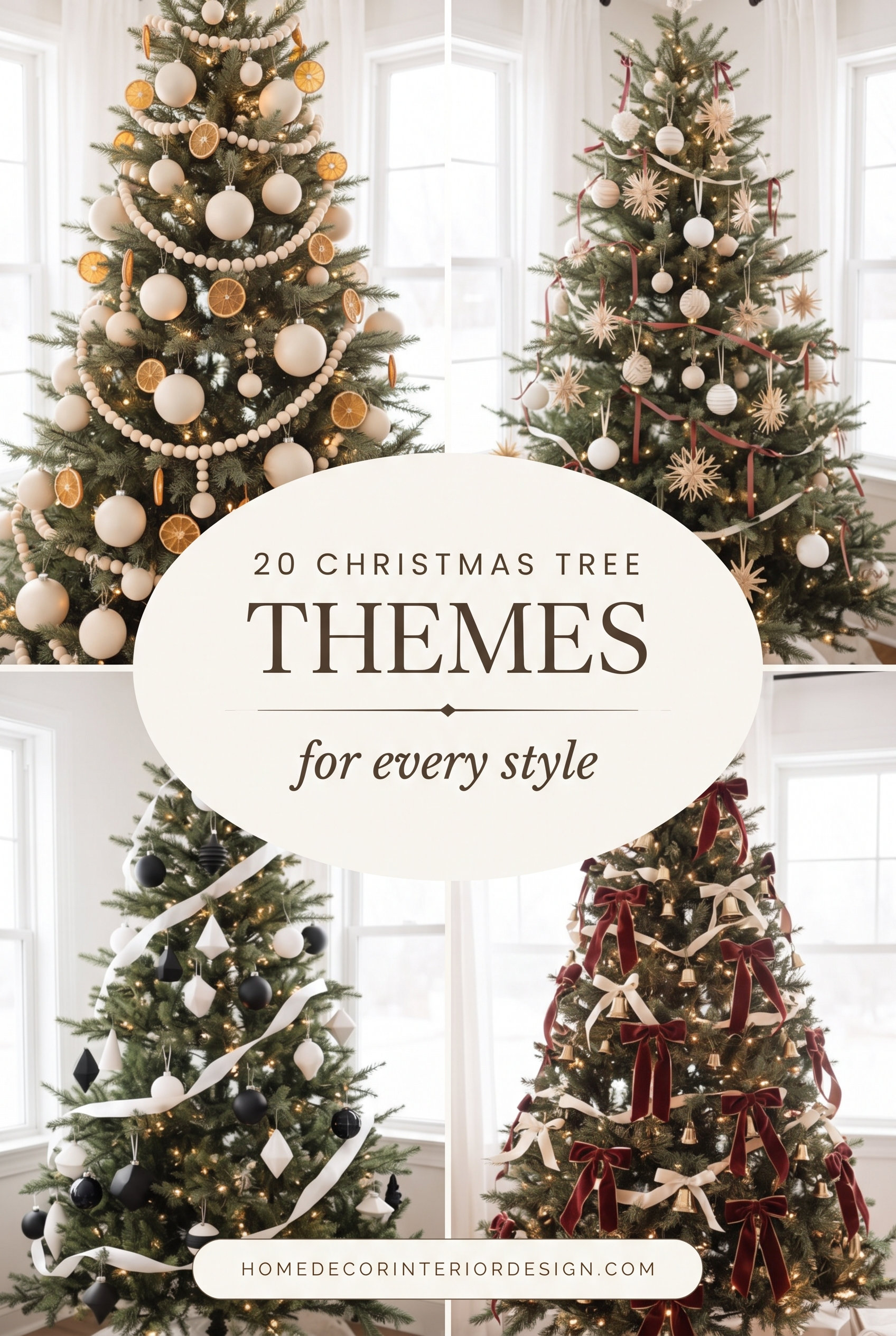
- Cream and wood. Matte cream balls, wood bead garland, dried oranges. Warm, calm, works in any room.
- Scandinavian. White, pale wood, simple straw stars, red ribbon used sparingly.
- Dried florals. Pampas, bunny tails and dried hydrangea tucked between branches.
- Winter white. White on white, flocked branches, silver glass, no second color at all.
- Forest. Pinecones, bottle brush trees, little wooden animals, moss green ribbon.
Classic
- Red and cream. The traditional look without primary brightness — choose a deep, slightly dusty red.
- Green and gold. Velvet ribbon, brass bells, warm lights.
- Heirloom. Only ornaments with a story, hung at eye level, with filler in one neutral color behind them.
- Candy cane. Red and white stripes, peppermint, a wide ribbon bow at the top.
- Victorian. Deep jewel tones, velvet, tassels, feathers, antique brass.
Modern
- Black and white. Matte black balls, white ribbon, a tree that reads graphic rather than festive.
- Monochrome brights. One strong color — cobalt, emerald, blush — in five shades.
- Minimal. Lights, one garland, nothing else. Harder than it sounds and striking when done confidently.
- Metallic mix. Brass, copper and silver together, no color at all.
- Paper. Folded paper stars and snowflakes, kraft tags, white lights.
Family and Fun
- Kids’ tree. A small second tree where children hang whatever they like, which protects the main tree from negotiation.
- Baking theme. Gingerbread figures, cookie cutters on ribbon, dried oranges, cinnamon bundles.
- Travel. One ornament per trip, filler in a single neutral, a map-paper tree skirt.
- Books. Paper garlands, little folded book ornaments, warm white lights, deep green ribbon.
- Pet-safe. Fabric and wood only, nothing breakable on the lower third, lights secured well out of reach.
Choosing a Theme That Fits Your Room
The tree sits in a room that already has colors in it. Three questions settle the choice quickly:
- What color are your walls and sofa? Pick a tree palette that includes one of them.
- Warm or cool home? Brass and cream for warm rooms, silver and white for cool ones.
- What do you already own? Count your ornaments before buying. Most people need filler, not features.
What to Do With Children’s Ornaments
Handmade ornaments rarely match a theme, and throwing them out isn’t an option. Three ways to handle it honestly:
- Give them one zone. The bottom third is kids’ territory. It’s where they can reach anyway.
- Give them their own tree. A small tree in the playroom or kitchen, decorated entirely by them.
- Make them the feature. Keep everything else plain cream, and the handmade pieces become the story of the tree rather than a clash.
Real Tree or Faux?
Real trees smell like Christmas, support local farms and cost less up front. They need daily water, drop needles, and have to be bought fresh each year.
Faux trees cost more once, then nothing. They hold heavy ornaments well, shed nothing, and suit homes with allergies. A good one lasts a decade.
If you choose real: cut an inch off the trunk before it goes into the stand, keep the reservoir full every single day, and place it away from radiators and direct sun. A tree that drinks well holds its needles far longer.
Common Tree Mistakes
- Too few lights. The most common one by far. Buy more than feels reasonable.
- Everything at the tips. Ornaments only on the outer edges make a tree look flat and hollow.
- All one size. Mix small, medium and large; variation reads as abundance.
- Cool white lights. They turn warm rooms grey. Warm white, always.
- A bare base. A basket or blanket at the bottom finishes the tree the way a frame finishes a picture.
Christmas Tree FAQ
How many ornaments do I need?
A rough guide is 10 to 15 ornaments per foot of tree for a full look — so 70 to 100 on a 7-foot tree, most of them inexpensive filler.
In what order do I decorate?
Lights, then ribbon or garland, then filler ornaments deep inside, then texture, then feature pieces, then the topper and the base.
How do I make a thin tree look fuller?
Fluff and separate every branch before you start, add more lights than you think, and push plain filler ornaments deep toward the trunk to close the gaps.
Can I mix themes between rooms?
Yes, as long as each tree is internally consistent. A neutral tree in the living room and a bright kids’ tree in the playroom look intentional, not chaotic.
Next Steps
Decide the palette, count what you own, buy filler and lights before anything else. The theme does the work.
Save this to your Christmas board on Pinterest so it’s ready on tree day.
Leave a Reply